Table of Contents
Hackney’s deputy mayor and education chief Cllr Anntoinette Bramble said: “Our teachers forum last year provided some valuable insights into what children wanted to see and how best to present information to help them learn.
“A big thank you to our museum team who kept local schools involved throughout the project and worked together to ensure the exhibition was as informative and entertaining as it could be.
“This reminds me of my time as a teacher looking for opportunities to bring learning alive!”

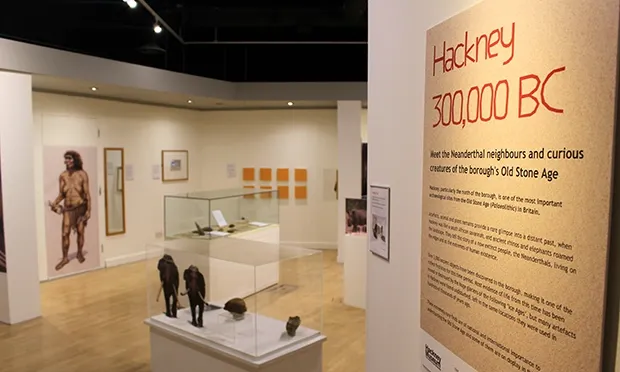
Among the exhibits are bone fragments of a straight-tusked elephant – thought to the largest land mammal ever to exist – that were discovered during sewer works in 1960 on Evering Road.
There are also handaxes found in the borough that offer evidence that Neanderthals were much more intelligent than given credit for.
Marks on the surface of the axes show they had multiple uses, including butchering and skinning animals, cutting wood and even digging.
Worthington George Smith (1835-1917), an eccentric architect and artist from Shoreditch, also features in the display.
Smith’s pioneering archaeological methods and dedicated research are still central to our understanding the British Old Stone Age.
In 1880, he explored the construction sites north of Stoke Newington Common, and over the next four years found more than 200 handaxes and ‘hundreds of thousands’ of flakes – another kind of stone tool used by Neanderthals. He found so many that he offered them to other collectors for the price of the postage.
Hackney 300,000 BC: Meet the Neanderthal neighbours and curious creatures of the borough’s Old Stone Age runs until 22 July at Hackney Museum.
Find out more at hackney-museum.hackney.gov.uk.